How to Cue Virtual Sessions: 5 Things That Made Me A Better Instructor
The Art of Virtual Cueing
Virtual teaching will expose every gap in your teaching. You can’t rely on your hands. You can’t rely on personal presence. You only have your words.
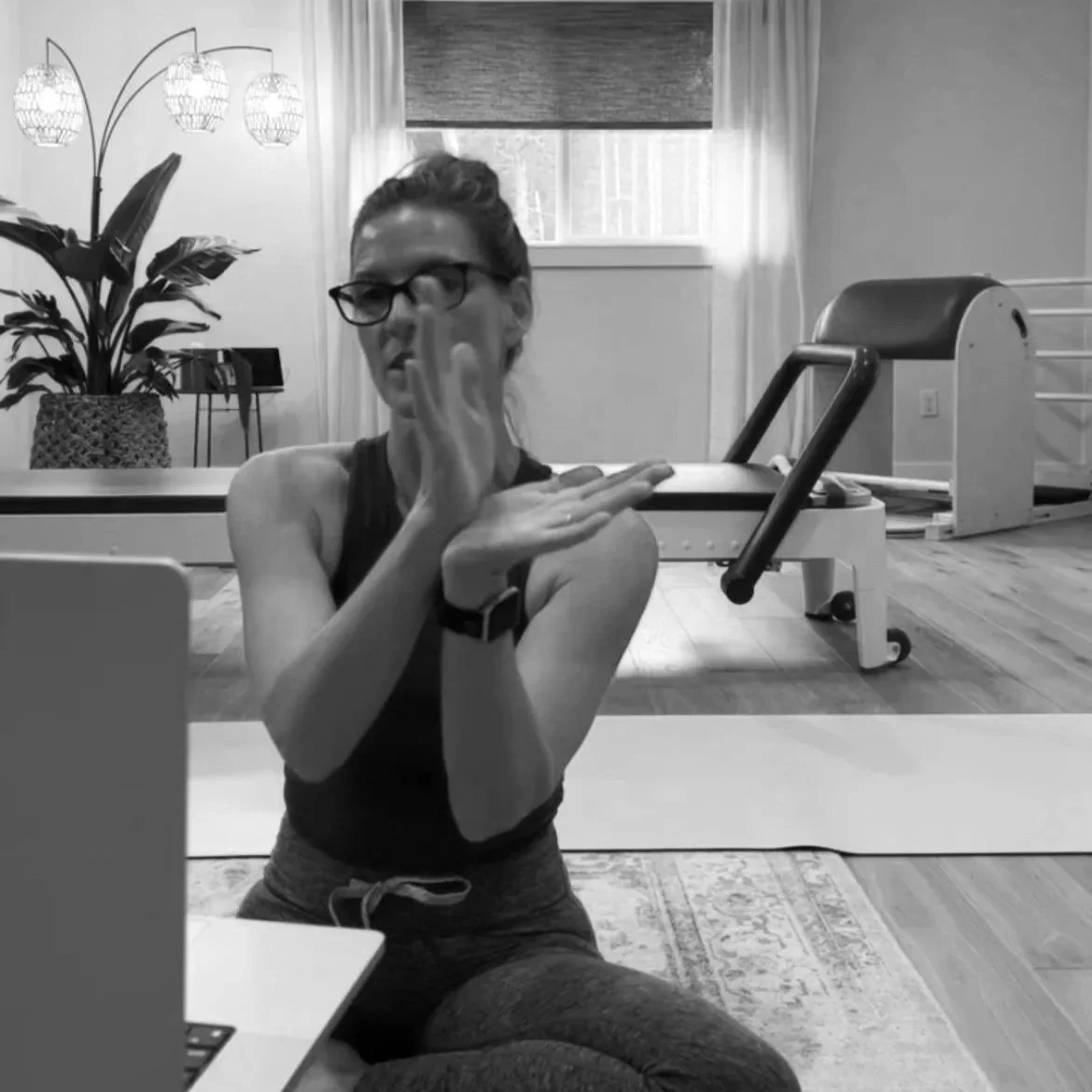
I’ve taught over 1500 virtual private Pilates sessions since 2020, and I’m still teaching my very first virtual client. Transitioning from in-person to virtual did have some challenges to work through, but I found my way. I’ve kept a sustainable virtual teaching business model (over 70% of my clientele are virtual) through continued refinement and development.
These are the things that shaped how I teach virtual sessions.
Cueing a successful virtual session
1) BE PRECISE - without using your hands, your words need to do the work. You need to be able to clearly communicate how to set things up, what the work should feel like in the body, and where the effort should be felt - without the fluff or vague language we often hear in Pilates. Will every cue land perfectly? No. We are human. Not everyone processes information the same way. When something doesn’t land I’ve been known to say, “well, that was a horrible cue.” We adjust and move on. Clients appreciate the honesty and it keeps the session moving.
2) LESS IS MORE - because the session is virtual, you’re already working without the power of physical presence. That means your cues need to carry more weight, not more words. This takes practice. You need to know the work well enough to break it down into what really matters. Talk yourself through the moves ahead of time. Write them down if you need to. The goal isn’t to say more, it’s to say what’s necessary and let the client move.
3) CUE THE ROOM (this is a big one) - pay attention to how often your client looks at you. If they keep looking to check in, it usually means your cues aren’t landing. Some people need to see the movement first. In a group setting they can see what others are doing. Virtually, that’s gone and you are their only reference point. You either need to demonstrate briefly before they move, or you need to become so precise with your cueing that they don’t need to look at you at all. If they can visualize and execute the movement without searching for you, you’ve done your job.
4) DEPTH OVER PROGRESSION - because you can’t physically spot or assist, progression looks different in a virtual session. You’ll need to find ways to advance your client without increasing risk. This might mean changing the set up while maintaining the integrity of the movement, or add a prop to create more challenge while maintaining control. Forward progression through creativity isn’t always the goal - depth is. Creativity in virtuals is about finding smarter ways to get the intended results.
5) SAFETY -this is, and always will be, your top priority. Without physically being in the room, your eyes have to work double time and your cues need to support this. It is imperative that you are one step ahead with equipment set up, alignment, modifications, even objects out of place. Eyes on the screen, always. Clear direction for set up, transitions, exit strategies, etc., always. This matters even more virtually than it does in-person. That being said, choose repertoire that you feel comfortable cueing while being easy to follow so they will be safe as you navigate them.
Not only did these 5 things help me during virtual sessions, they also made me a better instructor overall. I had no idea when I taught my first session, that it would become a valuable part of my practice. Not just for me, but my clients.
If you’re feeling uncertain, like I was, I get it. I’ve been there. If you’re ready to teach virtual sessions that feel just as intentional and effective as in-person. I’m building something for you. Be sure to join my list to be the first to know.