Cueing Men in Pilates
Training men isn’t about giving more cues. It’s about knowing which ones to leave out.
Pilates didn’t start out for women. It was developed by Joseph Pilates, working with men - bodies that relied on strength, control, and coordination. Many men I work with today aren’t lacking strength. They’re lacking connection to the movement.
They’ve been taught to bear down, push hard, and tune out noise. So when we layer cue on top of cue, or guide them through every sensation, we lose them. It just becomes more noise, and they’re already used to tuning that out.
Men tend to do better with clear direction.
One of the biggest shifts I’ve made when working with men, especially in virtual sessions, is leaving space. I don’t rush to fill the silence. I give a direction, and then I let it sit. What I’ve found across almost every male client I’ve worked with is that they take cues very literally. If I say too much, they try to do all of it at the same time, and that’s where things can fall apart.
So instead, I simplify. I give them something clear to move toward, and I let them process it without interruption. That’s when awareness starts to build, and that’s when the adjustments happen, not because I said more, but because I said less.
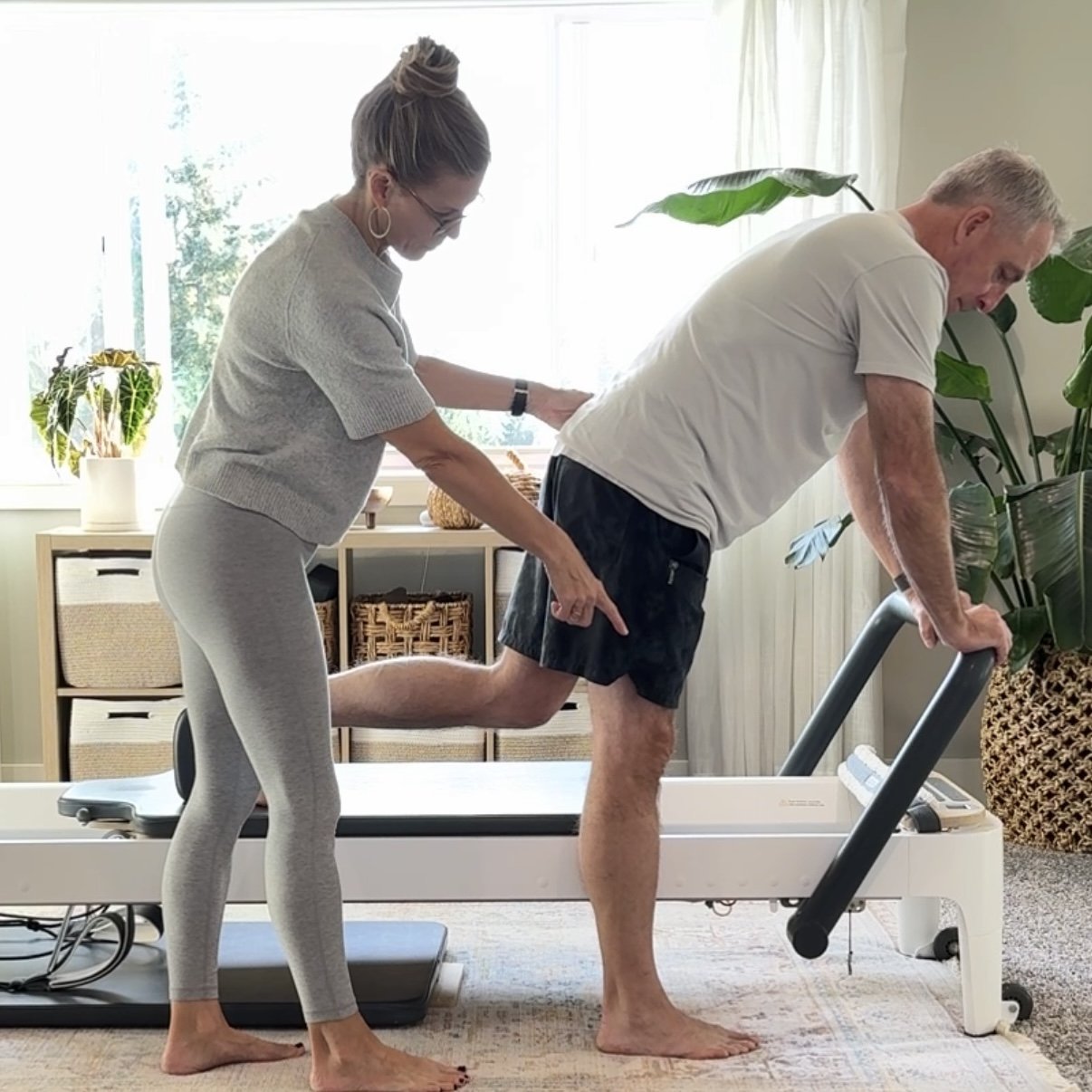
I spend more time establishing a few clear reference points that they can come back to. Not ten things, just one or two that make sense to them. These reference points stay consistent. I don’t keep changing the conversation every time.
One thing I’ve also changed when working with men is how I build the foundation. I spend more time establishing a few clear reference points they can come back to. Not ten things, just one or two that make sense to them. These reference points stay consistent. I don’t keep changing the conversation each exercise.
Without that foundation, it’s easy to jump ahead into movements they’re not ready to connect to. And when that happens, they default back to effort and pushing through, instead of connecting to the work. This is where I see a lot of men get lost in the method - not because they can’t do it, but because they were never given something consistent to connect to.
So instead of moving on too quickly, I stay with the basics a little longer. When I introduce something new, I don’t start over with a completely new set of cues. I bring them back to what they already know: find that same connection, go back to where you felt it before, keep that and add to it.
It gives them something familiar to reference instead of trying to process everything at once. They’re not relearning every movement, they’re recognizing something they’ve already felt. Once they can recognize it, they can recreate it and build on it.
That’s when the work starts to carry over from one movement to the next.
You’ll often see videos poking fun at men in Pilates, but they’re not discussing what’s actually happening. It’s men learning how to connect to parts of their body they’ve never been asked to feel before, without a foundations to reference.
How we respond to that matters. Those moments - the ones that look messy, slow, or uncertain are often where the work is actually landing.
Adding more advanced work to their repertoire because they’re strong, doesn’t make those movements more effective, especially for men learning how to connect to this work for the first time.
Build the foundation first.
If you’re an instructor trying to better understand how to build foundations like this into your sessions, This is exactly the kind of work I focus on in my mentoring.
🤍B